13/07/2020

4 Things We Learned from the Vysheyshaya Liga Round 17: 10-12 July 2020

A new feature that doesn't just focus on Energetik but also the wider context of the league. We'll see how this works, folks.

1. Ruthless Rukh have Energetik in an Eightsome Reel

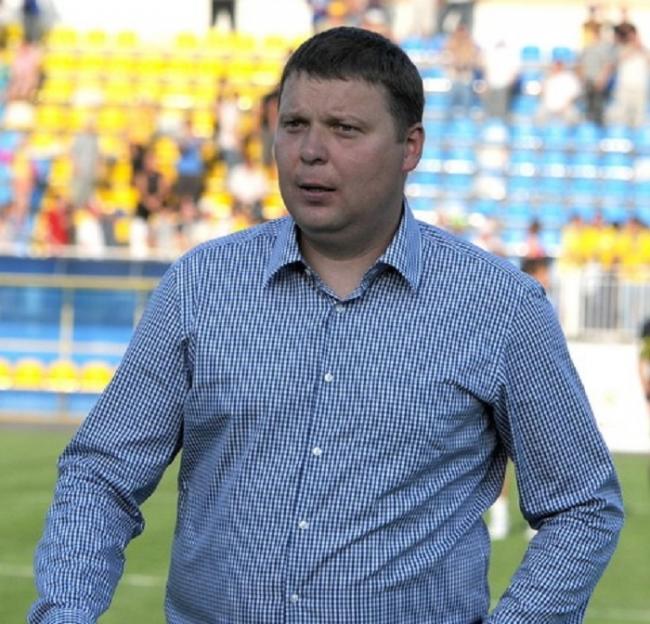
"Hey Siri, Show me the face of a coaching supervisor whose team just lost eight goals"
Energetik-BGU welcomed Rukh Brest to their temporary home in Molodechno in a game which most observers, your scribe included, predicted to be low-scoring and possibly a little drab. Both teams were trying to recover from the loss of talismans in the week's opened transfer window; Energetik's Jasurbek Yakshiboev moved to Shahktyor, making a scoring debut, whilst Senegalese forward Abdoulaye Diallo trod the very well worn path across an office in Brest to sign for corona-blighted Dynamo. With midfielder David Teklo Tweh also moving to the 2019 champions, changes were to be expected for Energetik, who had made three signings of their own. The lads coming in must have wondered if they had showed up at the right club today.

The surprise package from Minsk stayed in their traditional 3-5-2 formations but handed debuts to German Osnov at the back, coming in for the suspended Svirepa, and Mikhail Bashilov in midfield. Junior Atemeng was preferred to new loan singing Vladislav Mukhammedov up front.

Unfortunately, the game was a grandstanding disaster from the start for Energetik. Rukh had already come very close on a couple of occasions before Artem Konstevoy headed them in front on fourteen minutes; Osnov failing to cut out a cross, Sadovskiy, slightly out of position, flapping at the ball as it whistled across the face of goal, and Bashilov and Miroshnikov having a profound and nuanced debate on the meaning of existence between them, as Konstevoy sneaked in the gap between the goal-line philosophers to head home. This was bad enough, but things steadily just got..worse...and worse...and worse. By half-time, Rukh were four goals to the good. Evgeniy Shevchenko showed great strength to hold off the feeble challenge from Shkurdyuk to race into the area and drive a powerful shot past Sadovskiy for the goal of the half, turning almost with an astonished shrug to his team-mates. I don't think Rukh could believe how easy the game was for them.

The hope was for Energetik at half time that a few changes might enable the side to play for pride, at least, with the three points already long gone. Alas! Coach Eremchuk was so enraged with the poverty of what he was seeing before him that he had used all three substitutes by the fifty minute mark. Mukhammedov came on for his debut, replacing the consistently ineffective Atemeng; Sovpel also appeared for his by now traditional replacing of an out of sorts Umarov; debutant Bashilov was also withdrawn after a pretty horrendous, peripheral debut.

But,  plus ça change. Rukh rattled in a further four by simply weathering Energetik's half-hearted and disjointed attacking efforts, and hitting marvellously on the counter. Konstevoy managed to complete a hat-trick as a deadening and unforeseeable humiliation was completed. A consolation for debutant Mukhammedov was barely noticed and not celebrated, other than by ironic cheers from the Molodechno locals.

When Energetik strode off the Borisov arena last weekend, having completed the double over BATE, they wouldn't have imagined that they would be destroyed so comprehensively in their next game.  With such a young team unpredictable results can be expected, but even making allowances like these, this was nothing short of a disgraceful capitulation. The makeshift defence was torn hither and thither; the new midfield pairing of Bashilov (defensive midfield) with Nosko pushed further forward didn't work and both players didn't really appear to know what their role was; Mawatu, on whom much of the creativity in the team will now rest with, appeared only fitfully at the beginning of the second half; Yudchits barely touched the ball.


Credit must be given to the silver-shirted visitors for a golden performance. Coach Sedlev had really done his preparation on our team; relentless pressure in the middle of the park disrupted our new look midfield pairing, cut off supplies to the front two, and laid the platform for six different players to get their names on the score-sheet. I imagine the coach will have been sending a little message in the complex relationship between Rukh and Dynamo; with a little investment his team would be nailed on top four finishers. Even although they won't face such shambolic opposition every week, Rukh put down a marker for themselves today that may yet lay the foundations for a late rally into the leading positions in the table as the second half of the season unfolds. Kontsevoy, Dennis Grechikho and Chidi Osuwungu had stand out performances in Rukh's remarkable, ruthless display.

A result like this can demolish a season.  Perhaps to put it into perspective, our head coach Vladimir Belyavskiy was absent today "for family reasons"- we hope it's nothing sinister in these pandemic times, and send him best wishes. We need our experienced figurehead back urgently after a result like this.

Fortunately, Energetik's next fixture- against struggling FC Minsk- offers a chance of early redemption. Stand in coach Eremchuk reflected after the game that the team had "played disgusting, to put it mildly" and promised wholesale changes for next weekend.  Energetik's young squad will never have another more painful lesson in the highs and lows of football than in the experiential gap between the last two fixtures. Work must begin now to ensure this awful display doesn't undermine all the hard work that has been done up to now. Top three? Forget it. Anatoly Pavlovich's face in the stands told it's own story. So bad were we today, that we made the Slavia team from our last home game look like the Brazil 1970 World Cup winners by comparison. An embarrassing, sad and sobering afternoon for everyone associated with the club.


2. The Relegation Battle is Just Getting Started

Former Smolevichi coach Aleksandr Brazevich explains his resignation to the press. O Ye of little Faith!
For weeks now it has looked as though the automatic relegation places would be occupied by Smolevichi and Belshina Bobruisk at the end of the 2020 season. Now, however, the picture is far from clear.

After last weekend's thrilling 3-3 draw between Smolevichi and injury / illness-ravaged Dynamo Brest, it looked for 72 hours as though they may not survive. Low wages and a lack of funds to ensure the club completed it's fixtures left an early resignation from the league looking likely. Admirable coach Aleksandar Brazevich, who had encouraged his young side to play without fear, always on the attack, left, along with many of the loanees and some of the more high profile players. Brazevich, in a mournful press conference on Tuesday, cast doubt on the ability of his former team to survive, stating that the club were paying lower end Pershaya Liga wages, to the dismay of much of the squad.

However the situation was to be turned around completely by the end of the week. Brazevich's assistant, 33 year old youth coach Aleksey Mikhailov, took the job on and made extensive use of his talk-until-you-have-an-ear-tumour mobile tarriff. Dynamo Minsk were particularly helpful, sending four of their young reserve squad to sluice out water from the sinking Smolevichi sloop, and gain valuable experience in the process. A hardened core of the old squad- most notably goal-of-the-season contender Aleksandr Dzighero, vowed to stay on and see out the season. With a visit from upper-mid table Isloch at home on Friday, a throaty crowd of locals packed into the little Ozerniy Stadium, rallying round their stricken favourites and trying to work out who was who from the new players.

For fifteen minutes the new-look team played a little like Andorra at home to a middle ranking team in a world cup qualifier, a Hungary or a Slovenia. Isloch, accordion ringing in their ears, attacked the portakabin end without any cutting edge, and left far too high a line which Smolevichi's very youthful forward line were able to exploit.

But Andorra can't call on a striking talent like Dinamo Minsk loanee Vladislav Lozhkin, who announced his presence in remarkable fashion. Astonishingly, he had the team that had just met one another two up at half time; the first goal a confident finish, rounding the goalkeeper after a delightful 1-2; the second would have been playing on Eurosport and Sky all weekend had Ronaldo or Gareth Bale notched it. Running onto a lofted ball at the left hand edge of the area, the young man, running parallel to goal, dinked past three or four challenges before pirouetting and driving the ball low to Hatkevich's right for the second.  Smolevichi gave as good as they got in the second half, with Isloch's late consolation from a free kick coming when it no longer mattered. A 3-1 home win in this game was a hugely unexpected result, and showed that, despite their off-field financial problems, this small town club intend fighting very hard for their survival in the games that remain. I fancy other teams may take them a mite more seriously after watching these highlights.

No money troubles at backmarkers Belshina, but a change of gaffer. Dmitry Migas took the role on a caretaker basis after the departure of his former boss Eduard Gradoboyev at the beginning of last week, and the new manager effect bounced Belshina past an abject Torpedo Zhodino side on Saturday. Belshina were buoyed by the arrival of cult hero Dmitry Lebedev, an attacking midfielder from Krumkachy, in the week, and set about producing their most confident performance of the season.

Whilst their solitary previous win had come with a slice of luck and a virtuoso performance from ex-international Leonid Kovel in Molodechno, this triumph was much more of a team effort and relied much less on good fortune. Things began in typically ill-starred style for the home team when Torpedo's Kaplenko deflected a Lipe Veloso free kick past Kharitonovich with just six minutes on the clock. But, whilst Gradoboyev's Belshina may have foundered and sunk from such a blow, new-look Belshina took it as a challenge, equalising almost immediately. A surging Lebedev run and cross on the right was fired across goal and defended appallingly; Kovel was left unmarked to slide it home thanks to the visiting rearguard's carelessness.  The ageing striker then, er, "used his experience" at the beginning of the second period to win a penalty converted by Sergei Glebko.

Torpedo had a chance to level, but Gabriel Ramos' spot kick was an embarrassment, clearing the bar. Belshina could have won by more in the end. Torpedo gaffer Yuri Puntus, who spends the games pacing his technical area like a nervous toby-jug, must have been thoroughly chaffed off with the below-par performance turned in by his side, and apologised after the game to the travelling support. A really strong team on paper, Torpedo always seem to be less than the sum of their parts.

Belshina's next game, away to gubbins village outfit Gorodeya, is now extremely significant in the relegation battle. As the two strugglers begin to recover and narrow the gap on the teams above them, so the pressure increases in matches involving teams from a now detached bottom five in the table. If Belshina, with playmaker Lebedev pulling the strings, can bring some sugar back from Haradzeya then a hugely unlikely great escape may just be on. Certainly the hapless village bus-parkers, potless Slutsk and Andre Razin's gruesomely dull FC Minsk side will all be more than concerned by the bottom two's recent upturn in form.  

3. Wretched BATE Stumble Again

BATE just can't come out of their recent slump. Tactically outwitted by Leonid Kuchuk, humiliated by Energetik, and now held to a draw by carefree Slavia Mozyr, who will feel they deserved more from yesterday's 1-1 draw at the Borisov arena. Factor in the highly controversial 2-2 home draw with Shahktyor Soligorsk, and Kirill Alshevsky's team have managed just two points from their last four home encounters- relegation form by any standard.

Slavia, boasting one of the Smolevhichi refuseniks Artem Barsukov in their starting line up, for an immediate debut, had a tough opening ten minutes or so but when the early goal didn't come self-belief began to fade visibly from the confidence-shot hosts. New Mozyrite Barsukov came closest to opening the scoring in the first half, with a dipping thirty yard cannonball crashing back down off the bar. Only Nikita Melnikov, rushing in for the re-bound, will be able to explain how he sliced the ball wide of goal with BATE's keeper helpless and stranded.

BATE had a similar Christmas-Bloopers-DVD miss not long into the second half. A wicked, dipping, in-swinging Stashevich corner found Maksym Skavysh unmarked at the far post, just beyond the six yard box. With goalkeeper Baranovski unable to do anything, Skavysh unaccountably headed the ball against the post and it bounced away to safety. If you were looking for a piece of video footage to sum up BATE in the last few weeks, that would be it.

With seventy minutes on the clock Slavia were looking comfortable and BATE, as they had been in the last three home games, ever more desperate. Finally they had they bit of luck that they so desperately needed, when a desperate low trundler was fired in by Evegeny Yablonski from the edge of the area was turned by goalkeeper Baranovski onto the base of the post. Alas! The ball bounced back, hit the luckless keeper on the back of the head, and trundled slowly in. BATE's under-pressure players piled on top of one another as though they had won the Champions' League- but celebrated far too soon.

Shevchenko: Tumbling Octopus
Now a professional side that knows it's business would see out a game against weaker opposition, particularly after they had conceded such a morale-sapping goal. But not this BATE team. Almost immediately from the re-start, cult hero Gleb Shevchenko bounded into their area, one on one with BATE's keeper Shcherbitski. Shcherbitski intercepted Shevchenko, who immediately threw his legs up in the air theatrically, and sprawled behind the goal, like an octopus avulsed from his tank in a bizarre pet shop accident. Penalty. Chukley converted and BATE lacked the wit to break down Slavia again. 

There are rumours of problems in the BATE dressing room; with serially winning old stagers like Stashevich and Dragun less than impressed with some of the younger players and under-performing imports from the Balkans.Yevgeny Berezkin implied in an interview with the Tribuna football portal, that the coach was to blame for recent poor performances. On the park, the players seem locked in a permanent marathon anxiety-bingo binge.

With Shahktyor comfortably seeing off Gorodeya at Stroitel, they have real powerful momentum towards the title. Neman will also have a say, being only two points behind BATE with two games in hand. I suspect that failure to gain maximum points from their next two games against Rukh and FC Minsk may see Alshevsky's regime terminated much sooner than anyone had anticipated. Once serial winners like BATE lose the fear factor they have at home, change is needed.

This is a quality squad, albeit one in transition- but the coach is clearly not getting anything like enough out of them, nor has he inspired confidence in the group that he has a credible plan to win football matches. BATE play with a clogged, constipated fear of failure and are coming to expect not winning. The manager's Moyes-like postscript yesterday- "we lack implementation and luck"- doesn't even merit the label "feeble excuse".

 4. Neman : No Flash in the Pan

Finally, and elsewhere, Neman Grodno came through unscathed on a damp night and on a greasy surface in Vitebsk. Sergei Yasinsky's side really are under-rated I feel, very difficult to break down, just perhaps lacking a good attacking midfielder / wing back. Brazilian attacker Diego Santos had a really good game, testing Dudar with an early free kick that the goalkeeper struggled to hold, and giving big upside-down man Andrei Vasilijev the run around in the first half at the back. Neman, however, finished the half strongly, and perhaps had the best chance of the game  on the hour mark, when Jean-Morel Poé, their new signing from Smolevichi, had a powerful run and shot that was beaten away well by Soroko in the home goal. A draw was a fair result, and although scoreless the game between two good sides in difficult conditions was absorbing. Whilst Vitebsk may have ambitions to break into the top six by the end of the season, Neman will have much loftier targets than that. Tonight's hard-fought draw shows that they definitely have the boots for a serious title challenge, even if dimwitted headlines may discuss the end of their recent run of seven straight wins. Hard-fought points such as these are just as memorable as border derby wins, come the end of the season.

Igor Kovalevich's double album of mournful ballads "Vitebsk in the Rain" is now available on K-Tel
Jon Blackwood
Twitter: @jonblackwood

10/07/2020

Vysheyshaya Liga Match Preview, 17th Round: Sunday, 12 July 2020 v Rukh Brest


On Sunday Rukh Brest visit Molodechno with revenge in mind. In the second game of the season, Energetik pulled off a nervy, backs-to-the-wall single-goal win against Rukh, thanks to a towering Miroshnikov header from a Yak corner, just before half time. Rukh however hit the post, and passed up several other great chances in that game, so will come determined not to be the victim of another Energetik double.

Rukh are Brest's second team, and from 2017-19 were Dynamo's farm club. The links had to be broken, officially, when they won promotion at the end of last season to the top tier, for the first time. Quite how much these links have been actually broken remains a murky subject. Dynamo's owner, Aleksandr Zaitsev has been quoted this season as wanting to build up Rukh more following Dynamo's championship season last term.  Zaitsev is one of Belarus' wealthiest businessmen and has the resources to make Rukh very successful, should he wish to do so.

Brest is located on the south-western border of Belarus and Poland. It's actually possible to visit the city visa-free from Poland for up to ten days, making football weekends there attractive. With a population of nearly 350,000 Brest is a big city with a millennium of complicated and tragic history behind it. On or near a border for most of its existence, Brest has been overrun or ruled by Poles, Swedes, Lithuanians, the Tsars, Imperial Germans, Soviets, Nazis, Soviets again, before settling for the relative "calm" of independent Belarus since 1991.


Trotsky at Brest-Litovsk in 1918
The Russians called the place "Brest-Litovsk" in Tsarist times, and it was here that the fledgling Bolshevik state signed the Treaty of Brest-Litovsk in 1918, marking the end of Russia's involvement in the Great War. When the complicated Polish-Soviet war ended in the Treaty of Riga in 1921, the city became part of Poland, and was re-named "Brest on the Bug". Then, in 1939, the grubby Molotov-Ribbentrop pact saw Brest allocated to Soviet Russia as interwar Poland was dismembered by November that year. Brest has been part of the territory of Belarus since then. The Soviet defenders of the Fortress of Brest held out for a terrible week at the beginning of the German invasion of the Soviet Union in July 1941, founding a resistance narrative that persists to this day, with gigantic monuments to the sacrifice of soldiers and civilians dominant in the town.

So much historical drama is the backdrop to what seems a friendly and engaging city in our times. Brest is shaped by the lazy rivers Mukhavets and Bug. It's a place full of commerce and tourism; a place of art, theatre, music and nightlife; a place where an old school lantern lighter still lights up the illuminations along Sovetskaya. It's somewhere I am really looking forward to visiting and spending some time in, eventually, when Covid-19 has joined Trotsky in the dustbin of history.

Gigantic Soviet-era Monument to the Defenders of Brest
  
The Rapid Rise of the new Rukh Brest

Rukh are a strange team. Founded only four years ago by fans of Dinamo Brest as an amateur team, to play in the local Brest oblast league, their unusual badge claims that they were founded in 1922, which is a bit more than four years ago. That they are now a fully professional side in Belarus' top division, is a pretty astonishing rise, almost without precedent. The motivation for the new Rukh seems to have been a half way house between a Dynamo fans team, and a good amateur team for players in the city not quite good enough for the professional ranks. Few could have predicted how quickly Rukh would rise, back in 2016.
WKS Brzesc, Rukh's inter-war ancestors
The present day club lays claim to the heritage of interwar football in Brest, as club founder and chief executive Sergey Prisyazhnyuk has explained. The original Rukh had their origins in a Polish army team, WKS Brzesc, founded in 1922. Rukh (or ruch in Polish) is a word meaning "movement" or "motion". The club enjoyed some success in the 1930s and were close to making it into the top league in Poland in 1937. Called Ruch Brzesc by then, the club entered a play-off against teams from Grodno, Pinsk and Vilnius- cities all then in Poland, a measure of how much European geography was changed by the Second World War. Ultimately, the club was unsuccessful in gaining promotion, and disappeared when catastrophe overwhelmed the city in late 1939. The present day club's badge, therefore, is an acknowledgement of the history of the game in Brest, and has attracted a lot of interest from across the border in Poland.

The modern day Rukh's spectacular rise has taken them through amateur football, the Second League championship in 2018, and a heart-stopping win over Dnyapro Mogilev in last season's relegation / promotion play off. Everything about this final promotion was skin of the teeth stuff. Qualifying for the play off on goal difference, in third place in the First League table, just three goals better off than fourth-placed Lokomotiv Gomel, Rukh defeated Dnyapro 2-1 in Brest only to lose by the same scoreline in Mogilev. The lottery of a penalty shoot-out saw Rukh prevail 5-4 and enter the top league for the first time. With Dynamo already celebrating wresting the title from BATE, last season certainly was the best in living memory for Brest football.

The relations with Dynamo and Aleksandr Zaitsev remain something of a grey area. Both Dynamo and Rukh share offices in the city as well as the main stadium, GOSK Brestskiy. The side now has a squad containing players from Africa and South America as well as full home internationals, and there's steady traffic in players between the sides. The club's infrastructure is struggling to keep up with the team's remarkable on-field success. Their unusual bottle-green kit with grey socks has been the subject of near-erotic fixation amongst football shirt obsessives and new UK fans alike, but seems unobtainable, with a blanket indifference greeting many purchase requests from abroad. You can buy an unimpressive white t-shirt with the club badge on it for 60 roubles, though.

The fantasy UK equivalent to Rukh's story would be the West Ham United official supporters' club re-founding Thames FC (last played 1932) and entering them into the Isthmian League, with an all-conquering Thames re-joining the Football League four years later, all funded-but-not-funded-honest-guv by West Ham's ownership, run from a portakabin outside the London stadium. I think.

Rukh then are still a very new club rather blinking at their sudden projection from interesting historical footnote to prominent reality. There doesn't seem to be much of a rivalry between the teams, more a gentle amusement from the part of Dynamo fans that their little petri-dish experiment has grown so big so quickly. One gets the sense that a complete separation from Dynamo will be necessary before Rukh will really grow and establish themselves, and it's really not clear how or if that can happen. After all, if Mr. Zaitsev gets bored, and pulls whatever he may be providing, the club, still with a relatively small and new fan base, will tumble down the league structure just as assuredly as they have climbed it. Time will tell if Rukh will last longer than the seventeen years their Polish ancestors managed, or whether they will be yet another here-today-gone-tomorrow Belarusian football story. It's to be hoped not, as with an emerging youth system being run by the club, it's already been demonstrated that there's an appetite for more than one senior team in this historic city.

Rukh in 2020

Rukh Brest are a dedicated goalscorer away from being a top four side, and have had terrible luck with injuries this season. With just a couple of tweaks to the squad, particularly in the attacking department, they would be serious contenders for a European place. Yet, it's not clear how much the ownership actually want Rukh to challenge to dominance of Dynamo in the city, and potentially overshadow them in future. It's a pretty unique question for the club's hierarchy, all Dynamo fans. Consequently, Rukh sit a respectable ninth place in the table, in no danger of relegation, and likely to finish a bit higher. They are draw specialists, having drawn seven of their sixteen games this campaign,and results have been rather binary in nature: 0-1, 1-0, 0-0.

Rukh gaffer Aleksandr Sednev
Rukh are overseen by head coach Aleksandr Sednev, who joined Rukh shortly after their play-off success last season. Sednev had previously spent two years in Kazhakstan with FK Aktobe. In his mid-40s, Sednev has significant Belarusian managerial experience with Belshina Bobruisk and Dnepr Mogilev, as well as brief spells with Dinamo Minsk and the Belarusian under-21 side. He's exactly the kind of coach Rukh needed, a top-level manager used to working with slightly smaller clubs and set-ups. Sednev, a heavy-set and intimidating touchline presence, also had a fifteen year career as a player in the Belarusian and Russian leagues, spells at BATE and Baltika Kaliningrad being the highlights. Sednev is joined in the dugout by young coach Andrei Chelmodeev, who actually oversaw the tail end of the club's promotion and play-off success in 2019, as caretaker, before his new boss arrived. Already an A-Licence coach at just 30, Chelmodeev would be a likely long term candidate to take on Rukh once Sednev moves on. Kazakh Andrei Ferapontov completes the coaching set up.

Goalkeeper Roman Stepanov
Rukh can call on two excellent goalkeepers. Aleksandr Nechaev began the season, but he has been displaced now by Roman Stepanov.  28 year-old Stepanov joined Rukh from the breaking-up shambles that was last season's Torpedo Minsk, and gave the best performance by any goalkeeper that I have seen this season, in a 1-1 draw at Soligorsk. A depleted Rukh side missing their entire first choice defence surprisingly dented Shahktyor's title assault with an astonishing performance built on the athleticism, anticipation and strong hands of Stepanov, who produced a string of remarkable stops to keep the potash barons at bay. It will be a struggle now for Nechaev to get back in the side with his rival in such from.

Sednev favours an unusual 3-4-1-2 formation, with strong defence in mind. Injuries has seen this mutate into a classic 4-4-2 in recent matches. Vitali Gajduchik is a regular centre half, a former Belrusian under-21 cap, who has only missed games through suspension; he has over two hundred games in the top flight, as well as spells in Lithuania and Greece, and is a solid foundation for the back four. In the last couple of games he has started a partnership with Ukrainian Oleksiy Kovtun, a winter signing from Karpaty Lviv. Kovtun netted the winner for Rukh in their opening fixture over Dynamo Minsk, but struggled to establish himself, missing a long run of games before returning for the home defeat to Vitebsk- a game in which he was sent off. Brazilian centre half William, who has featured in the second tier in his home country, was expected to play a much bigger role in the side this term, having joined as a free agent in March for a two year spell. William seems to have been the first choice centre half but seems injured at present- a pity, as he is an elegant and calming presence in the defence, who always seems to have a bit of time on the ball.

Left back by trade, the versatile Artem Rakhmanov is also a regular at the back for Rukh. he has moved around a lot, having played in Estonia, Moldova, Sweden, Poland and Ukraine as well as his home country. He's a hard tackling, non-nonsense defender and dependable. Another Ukrainian, Oleksandr Migunov, completes the regular defensive line up. Having not quite made it at bigger Ukrainian clubs such as Dnipro and Shakter, this is his first spell in Belarusian football; he's also played with Shakter Karagandy in Kazhakstan.

Rukh also have good and settled options in midfield. The regular campaigners include Denis Grechikho, a regular Belarusian under-21 cap and a powerful central or attacking midfielder; his goal this season came in a fine 4-2 triumph for Rukh in Grodno, the last team to get the better of form side Neman. That game's highlights are well worth watching, featuring goal of the season contenders from Rukh's recently-departed Moldovan midfielder Andronic, and Neman's Kadymyan. Rukh were also the last side to get the better of Neman, before the beginning of their run of seven straight wins.

Denis Grechikho (right0
Alongside Grechikho club captain Sergei Tikhonovskiy is a regular, usually playing on the left. He was suspended for aggregating too many yellow cards for the last game against Dinamo, but will come back into contention for the game on Sunday. The skipper is another very experienced campaigner with a dozen senior seasons behind him, all in the Vysheyshaya Liga except for two years with Istiqlol in the Tajik capital, Dushanbe. However, the only ever present in Rukh's midfield has been right winger Artem Kontsevoy, another Belarus under-21 youngster who's chipped in with a couple of assists.

Chidi Osuchukwu signs for Rukh from Dynamo
More may have been expected of Nigerian central midfielder Chidi Osuchukwu, who signed for Rukh from who else but...Dynamo, at the beginning of this campaign. Osuchukwu was an important part of Dynamo's championship season, at the end of a three year spell there. He's been in and out of the side with injury but will be in contention on Sunday after returning last weekend against Dinamo Minsk. A final player to look out for is the Kazakh international Vladislav Vasiljev, an aggressive and hard tackling utility player who normally appears in central midfield, but has played across midfield and defensive positions to cover in Rukh's injury-blighted campaign.

We identified Rukh's problem area as being up front. Senegalese centre forward Abdoulaye Diallo, top scorer with four goals, has caught the eye this season but may be struggling for our game with a twanged hamstring.  Diallo is tall and powerful and moves very easily around the penalty box. But Diallo aside, not many of Rukh's forwards have made an impression. Last season's play off hero Vladislav Morozov has been unable to force his way into the side; two young loanees from Dynamo's second string, winger Nikiforenko and striker Bogomolskiy have not really made too much of an impact over the season; recognising the problem, Rukh and Dinamo swapped players. Full Belarusian international Evegeny Shevchenko joined Rukh, with attacking midfielder Pavel Sedko moving in the opposite direction. Shevchenko made an immediate debut against Dinamo Minsk, and will be certain to start again alongside either Bogomolskiy or Diallo, if fit, on Sunday.

Senegalese forward Abdoulaye Diallo skips past Sovpel and Miroshnikov in March at GOSK Brestskiy
But for injuries I feel sure Rukh would be a top six side. No one has really battered them this season. Sure, they lost the Brest "derby" 4-1, but that scoreline really flattered Dynamo; Rukh passed up several excellent chances to score with the game level at 1-1, and rather collapsed in the last ten minutes following the award of a very dubious penalty. Other than that, their other three league defeats have been by a single goal. The previously mentioned win in Grodno was a stand-out performance in one of the most exciting matches of the league season, and a tempting glimpse of the side's obvious potential. They come into this game on the back of two good wins; firstly at home against luckless backmarkers Belshina, where Rukh raced into a three goal lead after just forty minutes; and last time out against Dinamo Minsk, where Bogomolskiy finally got himself on the scoresheet for the first time in a dull affair.

I expect this weekend to be a low scoring or goal-less draw; if either side comes out on top, it will be by a single goal.

A Sobering Week : Farewell Yak & Tweh

It's been a sobering week in Belarusian football. Firstly came the awful news that Dynamo Brest's squad are riddled with coronavirus, and their game this weekend has been postponed, finally, after the usual display of initial callous indifference from the ABFF. Up to twelve players have the disease; they are the seventh club in the top flight, that we know of, to be afflicted by the virus in one way or another. Whilst all of us have enjoyed the league this season, and personally it has been of great help to my own getting through this awful time, it's dreadful news, and hopefully the players affected will be recovered and back in training soon.

Smolevichi's team last week against Dynamo Brest. Over half these players have now left the club. We have signed second front left, no. 9, Vladislav Muhammedov, a striker. He scored in the thrilling 3-3 draw from the penalty spot.
Beyond this, Smolevichi diced with financial oblivion after a thrilling draw with Dynamo at home. It seemed a strong possibility that the club would fold early in the week. Coach Aleksandr Brazevich and most of the club's better players left; several youngsters have come in on loan, and Brazevich's assistant has taken over as head coach. Smolevichi's chances of survival have clearly been hit, badly, by a lack of funds. Still, finishing the season is clearly a better outcome for everyone. Smolevichi are not the only club to be in financial trouble; rumours that Slutsk are desperately battling closure have got louder as the side has plummeted down the table, whilst Gorodeya's staff and players have been asked to take a pay cut. Belarus is in a difficult place economically at present, is really badly hit by the pandemic, and with almost all clubs being subject to some form of state ownership, there is a knock on effect on elite level football.


For almost all UK fans of the Vysheyshaya Liga this has been the first experience of a Belarusian transfer window, and what a dizzying ticker tape of news there has been since transfers became permitted on 1 July. At least it's been pleasant to go through the process unfiltered by the appalling Jim White.

First to go was the diminutive Liberian David Teklo Tweh. The central midfielder opted to sign at an inopportune time for Dynamo Brest and will no doubt ease his way into the side when normality resumes at the club. Tweh was virtually ever present for us this season and a really skilful and determined attacking midfielder. I always felt that Nosko gave Tweh a platform to play, and when Nosko was nobbled- as happened against Shahktyor and to a lesser extent against Dinamo Minsk- Tweh struggled. Tweh managed a couple of wonderful goals and assists and it's a real pity he's gone, as he was a player who was always exciting and enjoyable to watch. However, he is hugely ambitious, and will be on a much better salary at Dynamo, so best of luck to him and thanks, after a season and a half with Energetik.

I haven't been as dismayed by a player leaving for quite a long time as I was with the departure of Yakshiboev to Shahktyor Soligorsk. I'll be honest and say that his performance in the opening game against BATE was a big part of my deciding to follow Energetik this season. He played with such joy, such a freedom that afternoon, that you rarely see in games in Scotland or England. Clearly, Yak, on loan from Uzbek side Pakhtakor, was not going to be with us beyond this season, but I had hoped he would stay and become the league's second successive Energetik-based top scorer.

It would have been easier to accept if he had left for another country, but his moving to Shahktyor of all clubs is a punch in the guts. It seems that Yak is caught up in a chain with pink-booted popinjay Vitaly Lisakovich at the other end; Lisakovich's departure for a bench in the Russian Premier League is seemingly imminent. Pakhtakor were paying his salary whilst he was with us, so I am sure Shahktyor will be able to offer more in the complicated sub-lease arrangement that has now been agreed. In this sense, Yak's commanding performance at home to Slavia was a fitting farewell, given his suspension for the win over BATE last Saturday. Given the intensity of events this week, that win over BATE already seems to be six months ago. In addition to these departures fringe squad member Pavel Shorets has also left.

Mikhail Bashilov joins us from Belshina
Some of the magic beans that lured Tweh to Brest have already been spent on signing Russian defensive midfielder Mikhail Bashilov from Belshina Bobruisk. Eduard Gradoboyev has finally been sacked down there, and caretaker Dmitry Migas took the chance to move on Bashilov, perhaps with a First League campaign in mind next season. Bashilov played thirteen times for the league's bottom club and is a steady, capable performer. He scored a pearler from distance against Slavia Mozyr earlier in the season.

He's not a like for like Tweh replacement; I see him as a midfield utility player, capable of stepping in if Nosko is recalled by Dynamo Brest, or playing across central midfield. Now Tweh has gone, one would expect Haïk to play a much more prominent role as an attacking midfielder; Sovpel might finally start a game; there might be game time for Wictor Dias and other fringe forwards. Our strength going forward was bolstered as this was being written, by the arrival of Vladislav Muhammedov on loan from BATE's second string. Muhammedov spent the first half of the season farmed out at Smolevichi and was a virtual ever-present, scoring twice in fifteen games, both goals coming in their games against Dynamo Brest. He's a Belarusian under-21 international and stood out at under 19 level, with three goals in nine caps. It'll be interesting to see how he slots in and whether he makes an immediate start on Sunday. Muhammedov is with us for the rest of the calendar year.

It's hard supporting a youth academy, which is what we are. Our role is to develop young talent, and sell them on for profit either for ourselves or for the players' owner. Yakshiboev hadn't been prolific at any club before he came to Energetik, who helped turn him into a league top scorer and enabled him to catch the eye all over Europe. Our business model means that the maximum any player will stay with us is two seasons, and there's little chance to build a solid team that grows together over time. However, few are as good at this role as Vladimir, Anatoly Pavlovich and the White Caps on our bench. I just hope we don't dribble away down the table in the second half of the campaign, having more or less guaranteed safety from relegation in the first round of games, and that we keep pushing hard for a top three-four finish, something this talented young group are well capable of. However, it won't quite be the same Energetik without Yak's explosive running and goalscoring mixed up with baffling spells of petulance and anonymity. A club that's lost it's talisman needs a little time to re-adjust, as do the fans.

I'm looking forward to the game on Sunday and hope for once we can finish with eleven men on the park. As usual, Vladimir will persist with a 3-5-2. If Bashilov plays Nosko may be pushed further forward, or the new man may start on the bench with Haïk or Sovpel coming in. Yudchits will partner Muhammedov or Atemeng up front. It will be interesting to see how the team is re-shaped and what sort of performance we get. After all, we beat BATE without Yak and with less than an hour from Tweh. Rukh at home is a different proposition altogether, and I'm hoping we can go out and prove ourselves all over again. There's no reason why not.

Jon Blackwood
Twitter: @jonblackwood   

06/07/2020

Vysheyshaya Liga Match Report 16th Round : Saturday 4th July 2020, BATE Borisov 0-1 Energetik-BGU

Early Saturday afternoon was again a hot one in the Borisov arena, with the sun and shade slashing the pitch in half. A sparse crowd echoed in the arena, with some possibly staying away after the dreadful disappointment the previous week against Dinamo Minsk.

Vladimir had changes forced upon him. Bakić, far from being let off after his unjust dismissal against Slavia, was banned for two games, whilst Yakshiboev irritatingly missed another game owing to the yellow cards continuing to mount up. As a result, Yudchits returned to the centre-forward role partnering Junior Atemeng. Girs and Mawatu functioned as wing-backs in an otherwise unchanged line up.

Psychedelic Refereeing

This was a strange game in the first half and from the off it was very clear that the referee intended to have a big part in the match. Energetik started quite brightly, and spent more time than i expected in the tentative and hesitant home side's half. With just seven minutes on the clock, Aleksandr Svirepa was booked for what seemed a very innocuous incident. An attack of ours had broken down and home goalkeeper Chihkan had the ball safely in his grasp. He ran out of his box to release the ball quickly, with both sets of players retreating to take up their positions. There was an accidental collision between Chihkan and Svirepa. The referee decided that Svirepa had done a Nat Lofthouse on the goalkeeper, for no apparent reason, and flashed the yellow card. Looking back on the replay, the goalkeeper, oddly, seems to have run into Svirepa deliberately. This strange passage of play was to have dire consequences fifteen minutes or so later.

BATE were beginning to settle into the game a little, around the twenty minute mark. A series of passes across our retreating defence saw Drahun feed Nemanja Milić, shoulder to shoulder with Svirepa.   Running out of space, the Serb forward lashed the ball with his left foot across Svirepa, striking his left forearm. The referee whistled immediately for an incredibly harsh penalty award. And, as Svirepa had already been booked, nonsensically, he was dismissed for a handball offence in the penalty box. As a penalty award this was right up there with the notorious Pat van den Hauwe penalty in the Wales v Scotland world cup qualifier in autumn 1985. Missing our recognised strikeforce, and reduced to ten men with seventy minutes of a game against the league leaders to play; things looked very grim for us at that point.

Stanislav Drahun stepped up to take the spot kick. The experienced international hit the ball right down the middle as Sadovskiy dropped away to his right. But a lack of power from both men was critical. Dragun didn't hit the penalty hard enough; Sadovskiy wasn't fully committed to his dive. He threw up his black-gloved left palm and acrobatically turned the ball over the bar, just as his trajectory threatened to take his body out of the way. A quite remarkable, and unusual, penalty save. Still goalless, and the corner came to nothing. This was some kind of justice for what was an absurd  penalty award in the first place.

The penalty save and the re-organisation seemed to galvanise our team further and BATE needed to pick up again quickly and out the miss behind them. A goal was coming- at the other end.

Half way through the first half an untidy tangle between Alexei Nosko and Drahun saw the referee award a direct free kick to Energetik. The ball was about thirty five yards from goal and BATE, not expecting a direct ht from that distance, didn't really organise a wall, instead expecting a ball floated into the box or played down one of the wings. Shahkboz Umarov had a completely different idea. He put his head down and after a short run up put the laces of his right boot through the ball, hitting it with murderous power. Robert Carlos-style, there was a beautiful slight curve on it as it bent just inside the left hand post. Chihkan, tumbling like an upset spider plant across his goal, was beaten comprehensively. Yudchits lashed the rebound into the roof of the net gleefully as the whole team- Sadovskiy included, buried Umarov in astonished congratulations. This was a goal of the season contender, and it shook the home team profoundly.

Meantime some re-organisation was needed; the luckless Atemeng made way fr the recovered Haïk, who slotted into to shore up the midfield, as Nosko dropped a bit further back. BATE had a dangerous sally involving Milić, Baga and Drahun, but the ball was lost and fell to Sadovskiy at a crucial moment.

BATE almost suffered double jeopardy five minutes later.  Yudchits was fouled clumsily at the edge of their area, and acute angle to the right of Chihkan's goal. This time the home team took our little Uzbek much more seriously. Chihkan spent ages calibrating his wall, but to no avail. Again with a fully committed run up, Umarov hit a fizzing low drive that was difficult to see in real time; the ball cannoned off the base of Chihkan's left post and almost straight back to him. the chance was lost, but it was another sign that, even down to ten men, we were very much in the game.

BATE pressured us half-heartedly. Bojan Nastić shot over the bar from the edge of the area. the same player was involved in our biggest let-off, just before half time. a few neat passes saw him burst into our area on the left, with Girs on his shoulder this time. The wing back, concerned at Nastić finding space for himself, brought him down- clearly; there was a touch on the shoulder and something of a trip. It was a much clearer penalty than the first award. The referee, however, warming to his self-appointed role as a contrarian, decided that Nastić had imagined the whole thing, and booked him for simulation. This was a lucky escape for us; nine times out of ten, a penalty would have been awarded. perhaps the referee was reflecting guiltily on his earlier decision.

They Shall Not Pass

At half time it was pretty clear that the next period, with BATE refreshed and re-organised, would be attritional. I was really pleased with the way that the players had refused to buckle in the opening period and had continued to create opportunities despite the numerical disadvantage. The whole team had worked so hard to preserve our fragile lead.

I'll be candid; the second half was borderline unwatchable in places. It was a pitiless, horrendous siege where the home team created enough good chances to win their next five games, let alone this one. The tension in the game was quite extraordinary, and having watched the highlights a few times today, I still have no idea how BATE failed to take any of their chances. We have conceded at the last gasp a few times this season and the longer the half went on, the bigger the worry that a late slip might snatch the win away from us. It was a mixture of poor finishing, anxiety from the opposition, good goalkeeping, brave defending, luck and team-work that underpinned our win.

To be honest I don't see the point in writing a 6,000 word mini-thesis on all the chances BATE missed in the second half, but I will mention a few examples. The pressure was intense from the off after the re-start, and BATE ensured that we had little respite. Two minutes after the re-start, a dipping, nasty outswinging cross from Staševich was half-fumbled, half-parried by Sadovskiy at the edge of the six yard box, and the ball was hacked clear by Nosko.

Another move began, and again Staševich was the choirmaster; a delightful weighted ball played in Drahun, who had lost his marker, Haïk. In plenty of space, Drahun tried to cut the ball back from the touchline, and hit Sadovskiy's left hand post. The ball lobbed gently to an off-balance Milić (I think), in the middle of the goal, and with our defence pressing he struck an underhit, spooned shot which was creeping into the roof of the net, agonisingly slowly. Sadovskiy recovered to tip the ball over at full stretch.

From the resulting Staševich corner, the ball was played deep to the back post where Dmitry Baga, in plenty of space, hit a dipping volley across the face of goal. The slightest touch from anyone and the ball would have been in. But it hissed across the area and out, harmlessly. From a Nedaychik corner, Drahun, pressuring Miroshnikov, got a good header n it, but it floated just beyond the right hand post. Another minute, another Staševich corner, this time Dmitry Baga connected well with his forehead, and Sadovskiy saved brilliantly under his bar, at full stretch, turning the ball over and at the same time landing awkwardly, necessitating treatment.

The siege continued and it took a toll on some of our players. Tweh, exhausted, was withdrawn for the young Brazilian Dias, the first glimpse we've had of the forward in first team action this season. Umarov, as is now traditional, made way for Sovpel, having made such an impact on the first half.

The relentless assault continued. BATE had already created five really good chances in the first quarter hour of the second half, and a sixth came when Staševich lost Girs at the edge of the area. Again he gently lifted the ball, diagonally at head height, across the box. Nastić rose at the far post and again connected well, but the ball cratered the side netting harmlessly. Sadovskiy, perhaps showing the intensity that was running through our players, berated Girs for failing to block Staševich for a full thirty seconds after the ball went into touch. The young goalkeeper is normally quite laid back, and I've never seen him quite so furious.

The second half reminded me a little of watching Michael O'Neill's Northern Ireland team, having sneaked an early goal against a Holland or a Germany in a qualifying match, and then relying on Mikey McGovern and some bloke from Fleetwood Town to keep the opposition out. We had a rare break half way through the second half, having been completely unable to stop BATE totally dominating at our end of the pitch. Some messy interplay involving Haïk, Mawatu and Dias saw the ball fall to Girs, gathering pace to the left of Chihkan's goal. From the edge of the penalty area he hit a powerful low right footed half volley that the startled goalkeeper parried with three of our forwards lurking. Unfortunately, the rebound fell to a BATE defender, and the chance fell away. Dias didn't have much to do in the half, other than try to hold the ball up, but the wee man is lightning quick.

BATE's monotonous  and increasingly desperate attempts to score continued. We were fortunate that they seemed intent on walking the ball into the net, and always looked to pass sideways instead of more directly- a sure sign of a team lacking in confidence, or perhaps lacking inspiration. BATE began to look tired, jaded and increasingly fed up with their lot.

One of the Filipović's hit wide of Sadovskiy's left hand post from the edge of the area. Staševich, tired of his promptings and subtle passings being spurned, took matters into his own hands, driving into our area from the right and, from a tight angle, hitting a blurringly quick rising drive just over the bar with Sadovskiy struggling to cover. The minutes began to drop away. BATE began to doubt themselves even more. Dias fell over on the half way line, and won a free kick. Tick-tock.

Another Stašević corner, another header over from Drahun. Tock-tick. Time moved with all the rapidity of a drunk boar trying to find his way out of a locked barn. A final desperate corner with seconds left. Again a deadly, perfect set piece snaking viciously across our six yard box. Filipović, perhaps unsighted by Nekhajchik just in front of him, rose and met it perfectly. His angles were wrong though, and the ball flashed wide. Immediately, the final whistle peeped and the players slumped to the ground; ours exhausted, BATE's in despair. The Energetik bench exploded in scarcely believing celebrations and in time, our players were able to join in once the enormity of what they had achieved had begun to sink in. Nosko had enough strength to lift an exhausted Sadovskiy from his goal line; two key performers for us in the game, still battling for one another after the final whistle- a nice thing to see.

We Still Can Dream

I've been watching football for thirty years now and rarely have I been so proud of a team that I follow as I was at the final whistle on Saturday. What heart. What courage. What team-work. We've done a double over a team that is estimated to be thirty-three times more valuable than ours, and frustrated a team full of internationals and experienced campaigners on their own midden. BATE were booed off by their supporters, and manager Kiril Alshevsky once again finds his regime in deep crisis.

Happily, his woes are the source of our delight. Saturday was all about the Students from Energetik, and showing on the biggest stage in Belarusian football what we are capable of. This result leaves us as one of four teams at the top of the table, separated by just a point. Days like this make us hope for tangible rewards at the end of this exciting league season. After the home defeat by Belshina Bobruisk it looked like our top three pretensions were well and truly shattered. This victory shows that we still have every right to dream.

Well done to everyone involved on Saturday- Vladimir, the White Caps, the players. What a day, what a performance, what a result.

Energetik's guys celebrate doing the double over BATE after the final whistle (loads of photos can be found on Energetik's VK page)
Jon Blackwood
Twitter: @jonblackwood


02/07/2020

Vysheyshaya Liga Match Preview: 16th Round, Saturday, 4 July 2020 vs. BATE Borisov

Here We Go Again

On Saturday afternoon Energetik begin the second half of the Belarusian league campaign at the Borisov arena. We travel there in good spirits after the demolition of an absolutely wretched Slavia Mozyr side in Molodechno. Our hosts, meanwhile, as we shall see, are still licking their wounds after a concerningly poor performance last time out. Despite this, they are top of the table, three points clear of second place Shakhtyor, and four clear of a clutch of clubs, including ourselves, sitting on 26 points. Should Neman Grodno win their game in hand, however, they will be just a point shy of BATE as things currently stand. Can anyone really see the ludicrous yellow and green sticks of rock from the Polish border mounting a serious challenge, however?

Borisov is about forty five miles north-east of Minsk. It’s an old city, founded in the early twelfth century by Prince Boris, son of Vseslav the Sorcerer, a descendant of the ruling noble family from Belarus’ oldest city, Polotsk. Other than periodic conflicts the next big thing was the arrival of the railways, then the familiar pattern of destruction, displacement and re-building between 1918-44. Most of the city was destroyed during World War Two and subsequently re-built and industrialised along Soviet lines.

When BATE were one of the very few Belarusian teams folk had heard of in the before-COVID times, everyone assumed that the city, about the size of Middlesbrough, made tractors. Actually, it doesn't. BATE (Borisov Automobile and Tractor Electronics) is an industrial concern that makes motor electronics, for both cars and tractors; the tractors themselves are made at the gigantic MTZ factory in Minsk. The 'Belarus" tractor brand is emblazoned across the front of their shirts (and you can actually buy Belarus tractors in the UK). Geely cars from China are also a big presence in this part of the country, and their logo appears both on BATE and Torpedo’s shirts.


[The Wurzels]"Now I've got a brand new BELARUS tractor, and I'll Give you the Keys..."[/The Wurzels]

There is a long essay to be written on the intertwining of the history of the tractor and the history of post-war football in Belarus. The Minsk plant sponsored the now defunct MTZ-RIPO; a club called Traktor Minsk, a re-formation of an old Soviet team, is playing confidently at amateur level and may well return to the league set ups; FC Minsk and Isloch currently grace the Traktor stadium, in the capital. However readers will be grateful that I shall spare them a painful football / tractor mash-up experience here.

Although Borisov isn't exactly top of the tourist charts in Belarus, there is more to the city than car and tractor parts. It's meant to be quite a green and pleasant place to live in. There's many other Soviet-era industrial parts complexes, food processing, and quite an important base for the Belarusian army- this is an army town as much as a factory town. And there's some remarkable architecture, too, most notably the futuristic Borisov Arena itself.

The fabulous Borisov arena, beamed down from outer space in 2014

The new stadium, in the hinterland of Borisov between the edge of the town and the surrounding woods, opened in 2014, designed by a Slovenian architectural practice. It's an extraordinary thing outside, a cross between a contemporary art gallery, a 1960s imagining of a spaceship, and a Bond villain complex; this impressions cover a modern arena seating 14,000 inside. The national team plays regularly here and will do so until a new "for free" Chinese-built national stadium opens in Minsk in 2023. At least the football stadium sector of the Belarusian economy is booming.

Failure is Not Acceptable

BATE's season last year was unusual, in that they didn't win the league. Formed in Soviet times, in 1973, the club went into abeyance in the 1980s and re-emerged in independent Belarus. Since then, they have been an unstoppable trophy-winning machine; fifteen league titles, four Belarusian cup wins, seven Belarusian super cup wins. As a result, BATE have the kind of relationship with domestic football that Celtic have with the Scottish Premier League, TNS with the Cymru Premier, or Bayern Munich with the Bundesliga. Were they a British or German club I'm sure fans of all other teams would be united in a detestation of them; as it's Belarus, fan culture is somewhat different. Dinamo Minsk fans apart, there seems to be widespread respect for BATE's achievements as a rare example of a Belarusian footballing institution that can be very successful beyond the country's borders, and a sporting acceptance of the standards that they have set in the past. 

However  such a history and track record means that success is demanded, rather than merely expected. BATE's failure to take the title last season saw manager Alexei Baga leave the club at the end of 2019. Since then, new coach Kirill Alshevsky, who has been at BATE almost all his working life, has been charged with regaining the crown as a bare minimum expectation. Alshevsky has already re-started the stalled trophy-winning machine this season, in taking the Belarusian cup, albeit with a last gasp winner after two hours of sterile tedium against Dinamo Brest.

Alshevsky is unusual for a top-level coach in that he hardly played the game at all- a brief season at youth side RUOR Minsk in the Second League, before going into management in his early twenties. He has been associated with BATE since 2006, barring a very brief spell as assistant manager at Dinamo Minsk for a handful of games, and built up vast experience managing the national team age groups- under 16s, under 17s, and under-19s. Still not forty, Alshevsky then is a true Belarusian coaching technocrat, with potentially decades ahead of him in the leagues.

Head Coach Kirill Alshevsky accepts a manager of the month award at Vitebsk. The award's curse duly struck, BATE throwing away a two-goal lead against Sergei Yasinsky's irritating outfit

His time at BATE has been not without problems, though. The team looked frankly abysmal in the first fixture against ourselves in Minsk, when we prevailed with a spirited and exciting 3-1 win,  and doubled down with another poor display at the Yusnost in Mozyr, losing by the odd goal in three to Slavia, despite leading early on. Such is the expectation in the club that Alshevsky's regime was in deep crisis two games into the season. Aleksandar Hleb, the recently retired BATE legend, made some sympathetic noises in the Belarusian press, saying that the team looked "nervous". A narrow and unconvincing home win against an unambitious, defensive Rukh offered brief respite before another grim performance in Mozyr, this time a 0-1 reverse in the first leg of the cup semi-final.

Fortunately, whenever a coach is looking into the black pit of self-doubting despair, with questioning headlines buzzing around his head like angry hornets, Andrei Razin's abysmal FC Minsk side can make everything go away. The huge flat spot in BATE's carburettor was suddenly overcome, as Alshevsky's side triumphed 3-0 and began a run of thirteen games unbeaten.  The semi-final cup deficit against Slavia was overturned at the Borisov arena. Potless Slutsk, beginning to be overwhelmed by financial problems, meekly surrendered to a 0-3 defeat, in what was at the time a top-two clash.

BATE's frailties were exposed by luckless Smolevichi who perhaps deserved better from one of the most entertaining games of the season at BATE's old stadium, with a crazy game seeing the complacent league leaders stagger home 5-3 amidst a fusilade of remarkable goals. But it looked like Alshevsky finally had things licked in the late May double header with old foes Dinamo Brest. Their victory away over the 2019 champions, an assured 3-1 triumph, was one of their best displays of the season, and more like the BATE of old. They were tested severely in the league game, and weathered much pressure, with the hapless Pavel Savitsky missing a crucial chance with twenty minutes remaining, with the scores level. Two clinical late strikes sealed the points for the visitors, and the cup win followed immediately afterwards.

BATE win the cup and crow "Always First" on Instagram: Maybe not in the league, though, lads.

And Yet...

...something's not quite right with this BATE side. In the English-speaking community of Belarusian football fans many have said that BATE will stroll on and win the league easily. I've just never been convinced that they will. There's a fragility about the side, a lack of mental toughness that has been exposed ruthlessly in the last month. If BATE do end up winning the title this season, it will be as much the consequence of the challengers failing to get their act together sufficiently well (Shakhtyor Soligorsk, I'm looking at you) as any qualities BATE themselves may possess. It's also an ageing group, with many key players now the wrong side of thirty, with a period of transition looming, regardless of the final outcome of this season's championship.


The first evidence of this fragility came after BATE began to notch up a few wins. Captain Ihar Staševich gave a bizarre interview in the Belarusian press, throwing down the gauntlet to...Torpedo, Slutsk and ourselves, casting doubt on whether we could sustain our good starts. BATE captains of old simply wouldn't have noticed clubs like ourselves, and this showed how much their poor start to the league season had got to them.

More substantially, BATE have come up short, badly, in two recent key games at the Borisov arena. Firstly, in one of the most anticipated games of the first half of the campaign, they drew 2-2 with Shakhtyor. What was striking about the game was BATE's mental fragility. Shakhtyor led for much of the match, as the tension in the Arena grew rapidly. BATE, remarkably, found the reserves from somewhere to turn it around and lead 2-1 (remember, Shak hadn't conceded for seven matches at that point) but then the collective head was lost when a controversial late equaliser was allowed to stand. The last ten minutes of that game was probably the ugliest atmosphere of the season to date, and BATE lost all nerve and composure. Even although a point was a perfectly reasonable result- Shakhtyor are the chasers in second, after all- the rattiness and petulance was quite something to behold, as coach and players berated the referee at full time. From the neutral point of view, the goal was the right side of legal, so there was a strong whiff of "poor little rich kid" about the protests.

This cracking under pressure  was very obvious in last weekend's dire home reverse to Dinamo Minsk- a result that no-one, your humble scribe included, saw coming. What we saw last weekend was a younger coach being tactically schooled by an older rival. Leonid Kuchuk, pacing like a circus ringmaster in his technical area, played every moment with his side, with an incredible intensity and will to win. The contrast in body language with the sullen and silent Alshevsky was worthy of comment in itself. "BRAVO, BRAVO", barked Kuchuk with each tackle and kick of the ball, as silence increasingly descended on the home support.

BATE just couldn't break Dinamo's back four open at all- and again seemed to lose the head completely in the final third of the game, when a quickfire double sent them crashing to a first defeat in thirteen games. Alshevsky had a torrid row with the referee and his assistant was banished to the stands. The more you play mind games with BATE, the better for you. Kuchuk's tactical masterclass also showed that if you can frustrate BATE, they really don't have a Plan B, indicating a tactical rigidity as another area of concern.

Whatever happens at the weekend, I am still far from convinced that this BATE side will win the league. They bear little comparison with the BATE sides that performed creditably in Europe a few years back. They've lost three league games in the first half of the season alone; the last coach was let go having lost only four times throughout the campaign.

Personnel

Of course on paper this is a club that shouldn't be losing to any of their rivals. BATE, as one would expect, have a fine, balanced squad; a player-larder groaning with experienced internationals from home, and young boys from Croatia, Serbia, Montenegro, and Iceland, on their way up.

Keeper Anton Chichkan
24-year-old Anton Chichkan has established himself as Alshevsky's regular goalkeeper this season, seeing off the challenge of full international Denis Shcherbitski. Chichkan seems a very decent keeper by Belarusian standards, handling the ball confidently and capable of good saves in the times that he is tested. He's a Belarusian under-21 cap but has yet to make his full international debut.

Alshevsky is an attacking manager and has played a 4-3-3 system in almost every match this season. His back four is reasonably steady; a centre back pairing of Belarusian Zakhar Volkov, and Croatian international Jakov Filipović, who moved from Belgian side Lokeren at the end of March. Filipović in particular is a composed performer who finds plenty of time for himself on the ball. Volkov, meanwhile, is a folk hero, have bundled the ball in on the cusp of the final whistle, to win the cup for BATE. Another Filipović, the Serbian Aleksandr, is the regular at left back. Dmitri Bessmertnyih can move between right back and right wing back easily, and has turned out ten times between those positions this season.

Left back Aleksandr Filipović wins a header against Arsenal at the Emirates.
The middle of the park is probably BATE's strongest department, and has been pretty steady this season. Evgeny Yablonsky, who missed the opening two defeats but has been a regular presence ever since, operates as a defensive midfielder, breaking up attacks and feeding Stanislav Dragun, an excellent central midfielder with both pace and a great range of passing.

Stanislav Dragun in Europa League action at Stamford Bridge

Dragun has been a regular in the international set up for a decade, with sixty six caps and eleven goals under his belt for Belarus. The third component in the midfield trio has flitted between promising young Icelander Willum Thor Willumsson, who's done well every time I've seen him in the highlights,and the experienced Dmitry Baga, brother of the former manager. It's to Baga's credit that he's carried on contributing wholeheartedly, despite what must be a slightly awkward personal position in the squad.

The forward three isn't really too bad either, most weekends. Ihar Staševich also has over fifty Belarusian caps to his name; recently he netted his fifth international goal with a long range effort in Belfast against Northern Ireland. The club captain is lethal from dead ball situations and with shots from distance, and is very hard in the tackle. He's been an ever-present this season and has four goals to his name, two of them absolute pearlers of free kicks. At 34 he's coming to the end of a distinguished career spent overwhelmingly in Borisov, with over 400 games for the club; earlier he spent time at FC Gomel, and Dinamo Minsk. He's been back at BATE since 2015.

Ihar Staševich celebrates scoring for Belarus at Windsor Park

Top scorer for BATE this season is Pavel Nekhajchik, with seven goals in fourteen matches; he was suspended for last weekend's game having accumulated four yellow cards. Having had a slow start to the season he has warmed up with five strikes in his last six appearances, including vital goals in the 3-1 win in Brest, and at home to Shakhtyor. He'll come back into contention for selection this weekend. A final dangerous options is the Serbian stiker Nemanja Milić. Milić, who joined at the beginning of 2019 from Red Star Belgrade, has five goals to his name this season although hasn't quite nailed down a starting berth just yet. A lacklustre showing last weekend against Dinamo won't have helped his cause.
Leading scorer Pavel Nekhajchik comes back into contention this weekend
No Fear- No Regrets

We've seen the strength in BATE's squad, and for all the doubts about their levels of performance and their mental strength, it's a very good group with great options in every department. Critical to our success on Saturday will be keeping BATE at bay for the first third of the game, testing their patience, and beginning to play on the self-doubts that have crept into their game in the last month.

I hope that the club did appeal Dušan Bakić's red card from last week. if he is missing, that will be a major pity. The big Montenegrin scored the crucial third in the opening day win over BATE in March. If however he is unavailable, there is the possibility of bringing Yudchits back up front with Yakshiboev, or maybe even keeping Yudchits at wing-back and bringing in Sovpel.  The obvious Unamrov-for-Sovpel swap with Yudchits going up front is also a possibility, but then Vladimir does like his continuity in the outfield players, and will not want to tinker too much with the winning formula that he discovered so spectacularly last week.

I am expecting an attacking, open game with goals aplenty this week. Both sides enjoy attacking and are set up to do so. We don't have the players or the defensive mindset (thankfully) to go there and do a Dinamo Minsk. I do perhaps worry a little about their front three going up against our back three, so the battle in midfield will be critical with Nosko, Umarov/ Sovpel and Tweh all having vital roles to play. It's also another big opportunity for Yak to add to his growing reputation, after his performance of the season, last week.

Transfermarkt values BATE's squad at £67 million; ours at £2.4 million. The disparities between the clubs are absolutely enormous. So, I see this as a free hit for us. If we lose, well, so what, it's to be expected. But we have shown that we can beat this shaky BATE eleven once before this season and Vladimir and the boys should be going there concentrating only on what they can take from the game in a positive manner. If we go there with no fear we might just have the right to expect something a little better. And it's my birthday, so I'd prefer not to spend part of it watching us get drubbed. No pressure, lads.

The Yak and big Junior sprinkle pepper on BATE's cornflakes during our wonderful 3-1 win in mid-March
Jon Blackwood
Twitter: @jonblackwood